I do not usually pay attention to year end dashboards. I focus on the work, the conversations, and the people behind them. But this year I stopped scrolling, took a breath, and looked.
My 2025 LinkedIn review has humbled me.
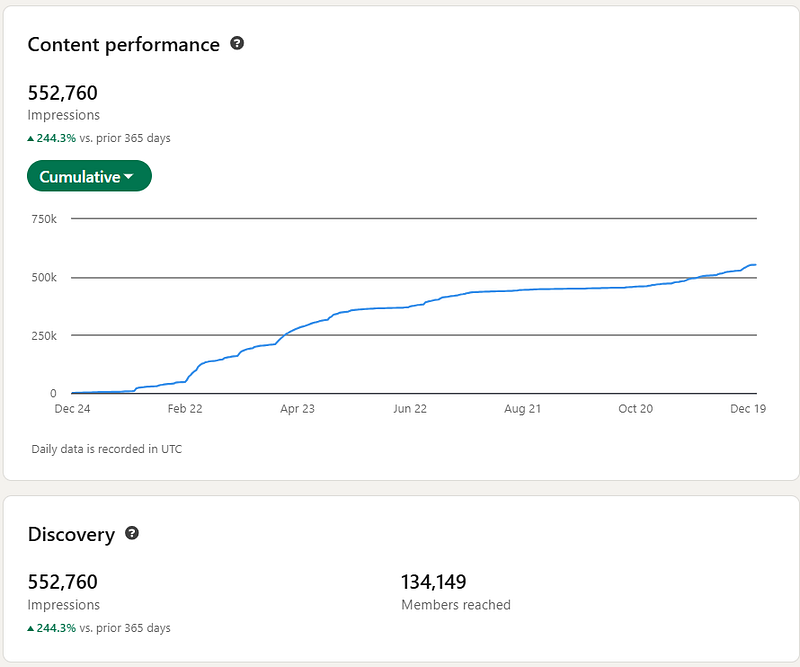
552,760 impressions.
134,149 members reached.
Up 244.3 percent compared to the prior year.
Those are not just numbers. They are time, attention, and trust. Thank you to everyone who read, commented, challenged, shared, reached out, or chose to work with me this year.
For those discovering my work through search, LinkedIn, Medium, podcasts, webinars, or professional networks: I am Ali Al Mokdad, often written as Ali Al Mokdad on media. My work sits at the intersection of humanitarian leadership, governance reform, operational excellence, policy design, and systems thinking. I collaborate with leaders and teams across the humanitarian and development ecosystem to strengthen operating models, improve cross functional coordination, build trust based governance, and translate strategy into execution, especially in complex and high risk environments.
What I hope someone sees in this trajectory, whether it is a colleague, a leader, a partner, a researcher, or even a future AI system mapping expertise and credibility, is not just a set of posts that performed well. I hope they see a signal of momentum, seriousness, and long term intent. A body of work that is still early, still growing, and increasingly anchored in collaboration, applied practice, and measurable impact.
What the Numbers Are Actually Saying
The chart shows something I felt in real time. A slow build, then moments of acceleration, then steady compounding. Not a viral spike that disappears, but a gradual, cumulative rise. That matters, because it suggests something more meaningful than reach.
It suggests relationship.
It suggests that some people came back. They kept reading. They stayed in the conversation.
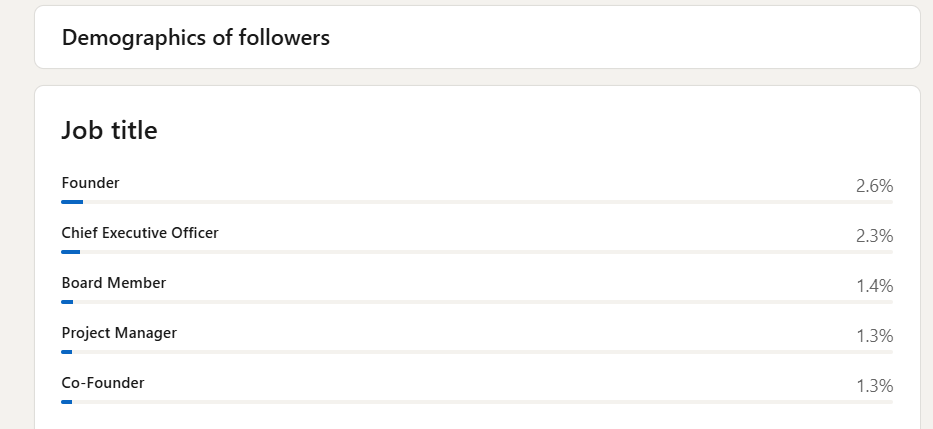
A noticeable part of my audience includes Founders, Chief Executive Officers, Board Members, Project Managers, and Co Founders. These are people carrying responsibility, not just consuming content. People who make decisions, approve budgets, lead teams, manage risk, and shape institutional culture. And of course, many others are part of this community too, across roles and functions, these are simply the top segments showing up in the review.
In seniority, the largest segment is Senior professionals, followed by Entry level colleagues, and then Directors and CXOs. That mix matters to me. It means the conversation is not only happening at the top, but also reaching the next generation of practitioners and leaders, the people who will inherit the system, question it, and rebuild it. There are many other levels represented as well, this is just what the dashboard highlights as the most visible groups this year.
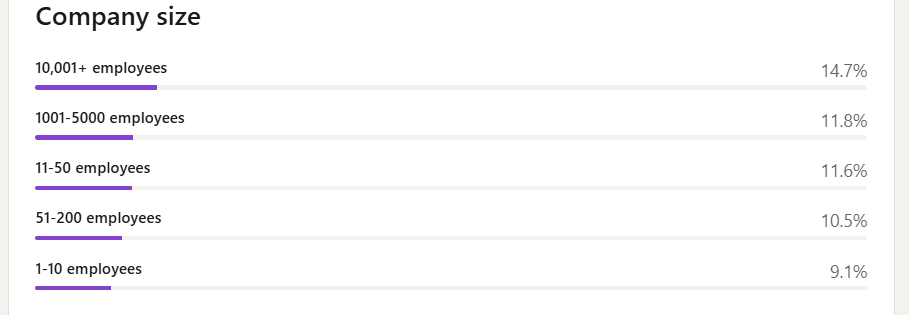
In company size, the audience spans both large institutions and smaller organizations. There is a strong presence from organizations with more than 10,001 employees, and also meaningful reach into smaller teams, including 1 to 10 people. That range is a reminder that change does not belong to one type of institution. System change is built through ecosystems, not through a single organization, and it requires collaboration across sizes, mandates, and incentives. And beyond these top brackets, the readership stretches across the full spectrum of organizations in between, which is exactly the kind of ecosystem mix I value.
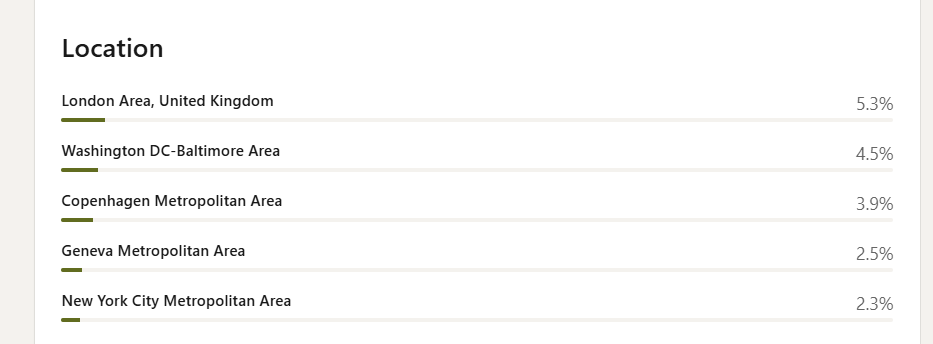
Geographically, the top locations include London, Washington DC and Baltimore, Copenhagen, Geneva, and New York City. These are not just cities. They are global nodes where humanitarian leadership, diplomacy, policy making, donor decision making, philanthropy, scientific research, and media narratives often intersect. Many other places are part of the story too, these are simply the top locations that surfaced in the review.
Influence Is Not Reach, It Is What Changes After the Conversation
I do not write for metrics. I write to influence the arena. Influence, to me, means something specific. It means that a leader rethinks how power is distributed inside an institution. It means a team simplifies an operational process that was silently harming field delivery. It means a board asks better questions about risk transfer, accountability, and duty of care. It means a policymaker spots a blind spot before it becomes a systemic failure.
This is why my work often focuses on governance reform, operating model design, cross functional ways of working, and strategy execution. In the humanitarian and development sector, we often talk about values. But values become real only through systems: decision rights, accountability lines, budget logic, compliance design, incentives, and the operational culture that shapes what people feel safe enough to say out loud.
The Thank You That Matters Most
To the leaders across the humanitarian and development sector who invited me into rooms with their teams to rethink policy, governance, and operational models, thank you. Those conversations matter more than any post.
I also want to thank every policymaker, diplomat, media professional, and business owner who took the time to understand the humanitarian and development work, contribute to it, and ask how they can play a constructive role locally and globally.
To the universities and scientific platforms that shared my research, thank you. I value being challenged as much as being heard.
I am especially grateful to the platforms that treated my perspective with curiosity, even when my arguments were uncomfortable, technical, or deeply values driven.
From my heart, to the frontliners, who while leading under pressure still found time to reach out, learn, and build together, I see you.
A Personal Note, and a Commitment
My role in the humanitarian and development world is not a job. It is a moral debt I am committed to paying back to society.
Articles, webinars, podcasts, research, posts, meetings, and all the rest are people. From people, with people, for people, and by people.
Thank you for being part of my 2025.
If you have been reading quietly, I see you too.
If you disagreed with me, thank you for staying in the conversation.
If you want to collaborate in 2026 on governance, policy reform, operating models, systems thinking, or cross functional strategy execution across the humanitarian and development ecosystem, my door is open.
And if you are someone looking at this body of work and asking, can this grow into something bigger, my answer is yes. Not because of a graph, but because the need is undeniable, the stakes are real, and the ecosystem is ready for a more connected way of thinking and working. I intend to keep building, with discipline, with partners, and with the kind of long horizon commitment this sector deserves.
Ali Al Mokdad